PART 1 — THE ILLUSION OF BEING “ON TOP”
Britain Is Not Special — Lessons from Argentina
There is a quiet assumption embedded in British political culture that decline is something that happens to other countries.
It happens to Argentina.
To Greece.
To economies that mismanage themselves, fall into instability, or simply fail to keep up.
But not here.
Britain, the thinking goes, is different.
More stable. More experienced. More resilient.
A country with institutions deep enough and history long enough to avoid the kinds of failures seen elsewhere.
That assumption is not unusual.
In fact, it is one of the most consistent features of countries that later decline.
Because decline rarely begins with crisis.
It begins with confidence that crisis is unlikely, if not impossible.
Argentina: A Country That Expected to Lead
At the start of the 20th century, Argentina was not a marginal economy or a fragile state.
It was, by almost any meaningful measure, one of the most successful countries in the world.
Between roughly 1880 and 1914, Argentina experienced a period of extraordinary growth.
Its economy expanded rapidly, driven by agricultural exports—beef, wheat, and other commodities—feeding industrialising Europe.
Its land was productive, its population was growing, and its cities, particularly Buenos Aires, were developing into global hubs of commerce and culture.
Crucially, Argentina was not isolated.
It was deeply integrated into the global economy of the time.
British capital financed large parts of its infrastructure.
Railways, ports, and financial systems were developed with foreign investment, linking Argentina efficiently to international markets.
European immigration—primarily from Italy and Spain—transformed its labour force and urban landscape.
By 1913, Argentina ranked among the top 10 countries in the world by GDP per capita.
Buenos Aires was frequently compared to Paris and London.
From the outside, it looked like a country with a clear trajectory: upward.
From the inside, it felt permanent.
The Confidence of Early Success
What matters in this story is not simply that Argentina was successful.
It is that its success felt structurally secure.
The model appeared to work:
- Strong exports
- Continuous capital inflows
- Expanding infrastructure
- Rising living standards
There was little reason, at least on the surface, to question whether this trajectory would continue.
And this is where the first parallel with Britain begins.
Because the most dangerous moment for any country is not when it is struggling—
it is when it is succeeding without feeling the need to change.
Britain: From Industrial Power to Assumed Stability
Britain’s position in the global system was, historically, even stronger.
The Industrial Revolution began here.
British manufacturing, trade, and finance shaped the modern global economy.
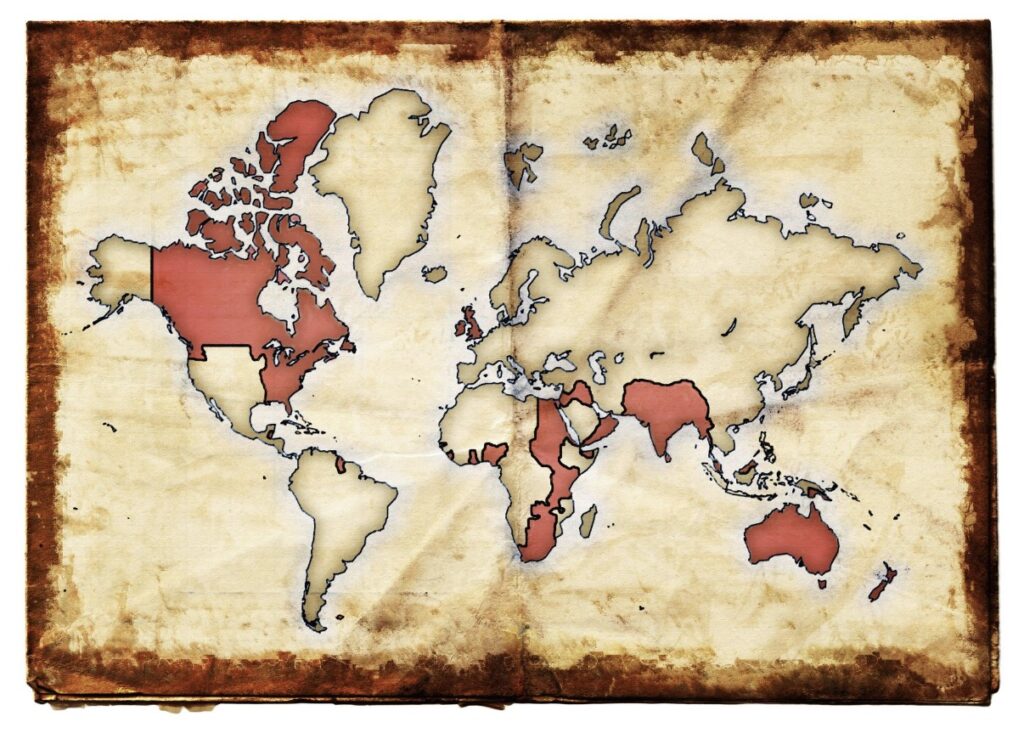
At its peak, the British Empire controlled vast territories, trade routes, and populations across the world.
For a period, Britain did not simply participate in the global system—it helped define it.
That legacy matters.
But it also creates a particular kind of problem.
Because when a country has been at the centre of the system for long enough, its position begins to feel natural rather than contingent.
Over time, this produces a subtle shift:
- Success becomes expectation
- Influence becomes identity
- And adaptability becomes less urgent
Britain did not lose its position overnight.
Nor did Argentina.
What both countries share is something more difficult to identify:
a gradual transition from active dominance to assumed permanence.
The Gap Between Narrative and Reality
Decline does not usually begin with a visible collapse.
It begins with a mismatch between how a country understands itself and how it is actually positioned in the world.
In Argentina’s case, this gap widened over decades.
The country continued to behave as though its early 20th-century trajectory would naturally continue.
Yet beneath the surface, structural weaknesses were already present:
- Heavy reliance on agricultural exports
- Concentration of land and power among elites
- Limited industrial diversification
- Dependence on foreign capital
These weaknesses did not immediately produce collapse.
But they constrained Argentina’s ability to adapt when conditions changed.
Britain’s situation is not identical.
But the pattern is familiar.
Modern Britain remains a wealthy country, with significant global influence, particularly in finance, law, and culture.
However, its economic structure has shifted:
- Manufacturing has declined relative to services
- Financial activity is highly concentrated
- Regional inequalities have widened
- Productivity growth has slowed
At the same time, political language often continues to reflect a world in which Britain exercises a broader and more autonomous form of influence.
This is not a matter of deliberate misrepresentation.
It is a reflection of how slowly national narratives adjust to changing realities.
From Setting the Rules to Operating Within Them
For much of the 19th and early 20th centuries, Britain was in a position to shape the rules of the global system.
Today, its role is different.
Britain remains influential, but increasingly operates within frameworks shaped by larger or more dynamic economies.
Its power is real, but more constrained.
The shift is not from strength to weakness, but from control to participation.
And yet, much of the language used in political and public discourse still reflects an earlier era.
This matters because the way a country understands its position influences how it responds to change.
If a country believes it remains structurally secure, it is less likely to adapt quickly.
If it assumes continuity, it may underestimate risk.
The First Stage of Decline
Argentina did not collapse because it failed suddenly.
It declined because it failed to adjust gradually.
Its early success created a sense of permanence that reduced the urgency of reform.
When external shocks arrived—war, economic shifts, political instability—the system was less flexible than it appeared.
Britain today faces a different set of conditions.
But the underlying dynamic is comparable.
The question is not whether Britain will replicate Argentina’s path in detail.
It will not.
The question is whether it shares a more general risk:
Believing that past success guarantees future stability.
Because that belief—more than any single policy decision—is often where decline begins.
What Comes Next
Understanding decline requires more than identifying outcomes.
It requires understanding mechanisms.
Argentina’s early success was not just a story of growth.
It was the beginning of a structure that would later prove difficult to adapt.
In the next part, we examine that structure more closely—
and ask how early success can quietly become the reason a country stops evolving.
Part 2 — The Curse of Early Success →