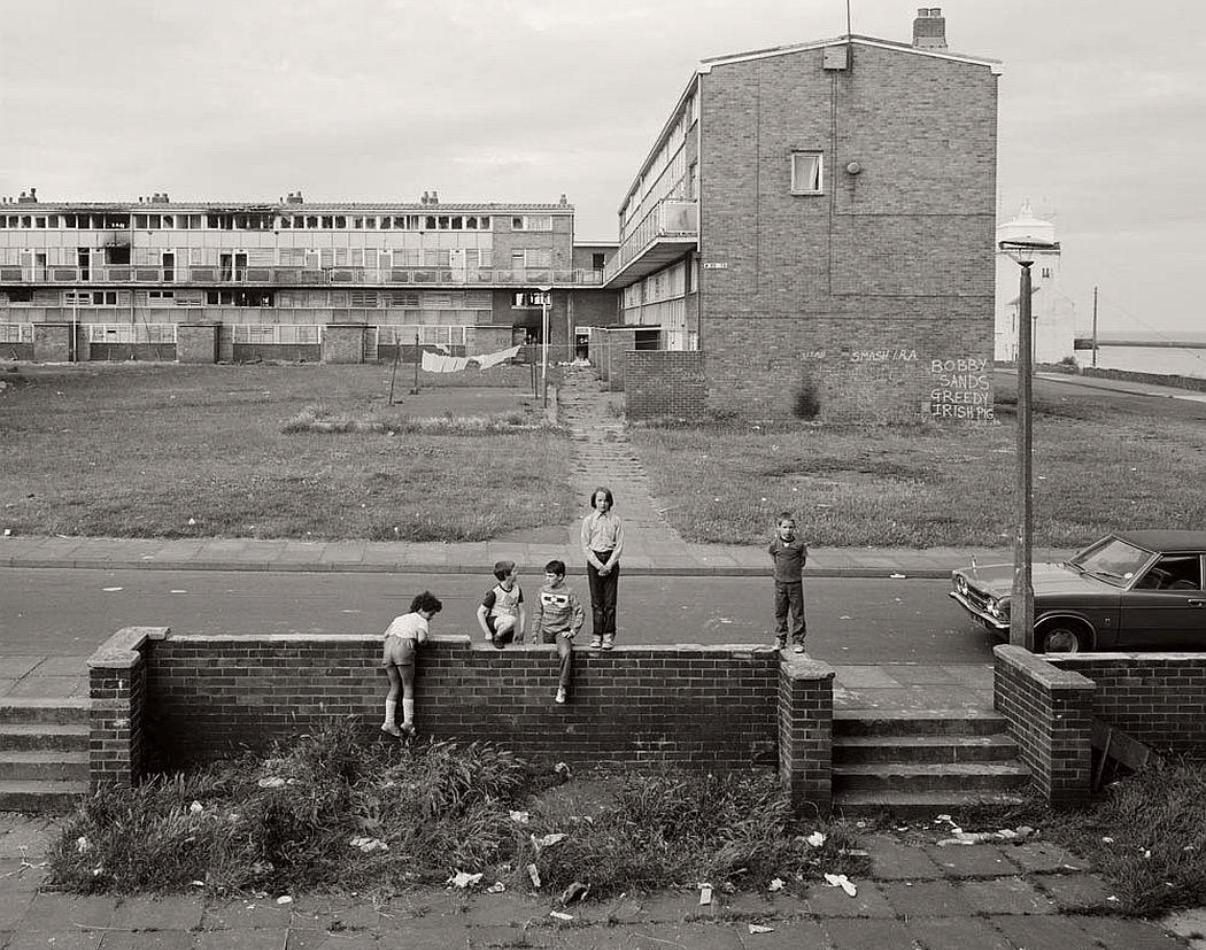
Britain Doesn’t Debate Children — It Debates Who Deserves Them
Britain doesn’t debate whether children need support.
It debates which children deserve it.
That is the fault line running through one of the most emotionally charged debates in modern British politics.
On the surface, the argument is about policy — Child Benefit, Child Maintenance, the two-child cap.
But beneath that, something deeper is happening.
This isn’t about money.
It is a debate about who Britain believes is entitled to stability, dignity, and a future.
A Wealthy Country — With Falling Living Standards
Britain still presents itself as a wealthy country.
In global terms, it is.
But that wealth is uneven, increasingly concentrated, and often detached from everyday life.
According to the Office for National Statistics:
- Real wages have barely grown since 2008
- Productivity has stagnated for over a decade
At the same time:
- Around 4.3 million children are living in poverty
- Roughly 3 in every 10 children
Figures consistently highlighted by the Joseph Rowntree Foundation and the Department for Work and Pensions.
This is not a temporary downturn.
It is a sustained shift in living standards.
Two Systems — One Misdirected Debate
Much of the outrage is built on confusion.
Two entirely different systems are repeatedly blurred:
Child Benefit
A universal state payment to help with the cost of raising children.
Child Maintenance
A legal obligation between parents. Not funded by the state.
They do not overlap.
Yet they are constantly conflated — allowing debates to be driven by emotion rather than fact.
When systems are misunderstood, narratives fill the gap.
The Two-Child Cap: Policy and Consequence
Introduced in 2017, the two-child benefit cap limited support to the first two children in most families.
Its impact was clear:
- Over 1.5 million children affected
- Families losing £3,000+ per year per additional child
Research from the Institute for Fiscal Studies and the Child Poverty Action Group consistently linked the policy to rising child poverty.
This was not about behaviour.
It was about withdrawal of support.
The Numbers Britain Avoids
The debate sounds moral.
The outcomes are measurable:
- 4.3 million children in poverty
- Wage stagnation lasting over 15 years
- Rising housing and food costs
- Increasing pressure on household finances
Compared to many Western European countries, the UK has higher child poverty rates and a less redistributive welfare system, a point repeatedly highlighted in analysis linked to the European Commission.
These are not isolated failures.
They are systemic outcomes.
Austerity and the Shift in Thinking
After 2010, austerity reshaped more than budgets.
It reshaped perception.
Over time, a narrative emerged:
- Poverty became framed as personal failure
- Support became conditional
- Dependence became stigmatised
Meanwhile:
- Economic growth slowed
- Public services weakened
- Living standards stagnated
Austerity did not just reduce spending.
It redefined responsibility.
The Direction of Money
The reaction to reversing the two-child cap reveals something deeper than policy disagreement.
It reveals sensitivity to where money flows.
When financial gains move upward — through asset growth, tax changes, or capital — the response is muted.
When support moves downward — toward lower-income households — the response becomes louder and more moralised.
The same spending can feel acceptable or unacceptable depending on who benefits.
Perception and “Deservingness”
Public reaction is rarely neutral.
It is shaped by perception.
Support directed toward:
- stable
- working
- middle-income families
is often accepted.
Support directed toward families perceived as:
- poorer
- migrant
- single-parent
- outside social norms
is more likely to be questioned.
This distinction is rarely explicit.
But it is consistently present.
A Society Under Pressure
When living standards stagnate, societies change.
- Empathy narrows
- Judgement increases
- Support turns conditional
- Blame shifts downward
This isn’t unique to Britain.
But it’s visible here.
When systems strain, the pressure is rarely directed upward.
A Policy Change — A Narrative Disruption
The reversal of the two-child cap is not just administrative.
It challenges a broader narrative.
It suggests:
Children deserve support because they are children.
Not because of:
- income
- background
- perception
That idea runs against a decade of messaging that framed hardship as individual failure.
Conclusion: The Question Behind the Debate
If this debate were truly about children, the conclusion would be straightforward.
No society benefits from widespread child poverty.
No economy strengthens itself by weakening its future.
Yet Britain continues to debate whether support is justified.
So the real question is not:
“Can we afford to support children?”
It is:
How did we become a country where that question exists at all?
Britain: System Failure — Series
This is Part 1 of Britain: System Failure
A series examining how the UK distributes wealth, pressure, and responsibility.
 Next: Work Without Reward