Ten years on, and I don’t think people fully understand the scale of what actually happened.
Not emotionally. Not politically.
Just… practically.
Because no one’s ever done this before. Not like this. Not at this level. And definitely not while already carrying the kind of system we had in place.
We were already a country where a lot of the core functions had been pushed out. Privatised. Fragmented. Money constantly leaving instead of circulating. That was the starting point.
Then we added friction to trade. Quietly. Structurally.
Not in a way you notice overnight — but in a way businesses feel immediately.
And they did.
Some adapted.
A lot didn’t.
Margins got tighter. Costs crept up. Paperwork increased. Delays became normal. And slowly, businesses just started disappearing.
Not always dramatically.
Just… closing. Quietly. One by one.
You don’t see that on a headline.
But you feel it over time.
Then COVID hit 
And whatever resilience was left got tested properly.
Then energy 
Then war 
Then everything else layered on top.
And that’s when it starts to become visible.
Not as a single event — but as a pattern.
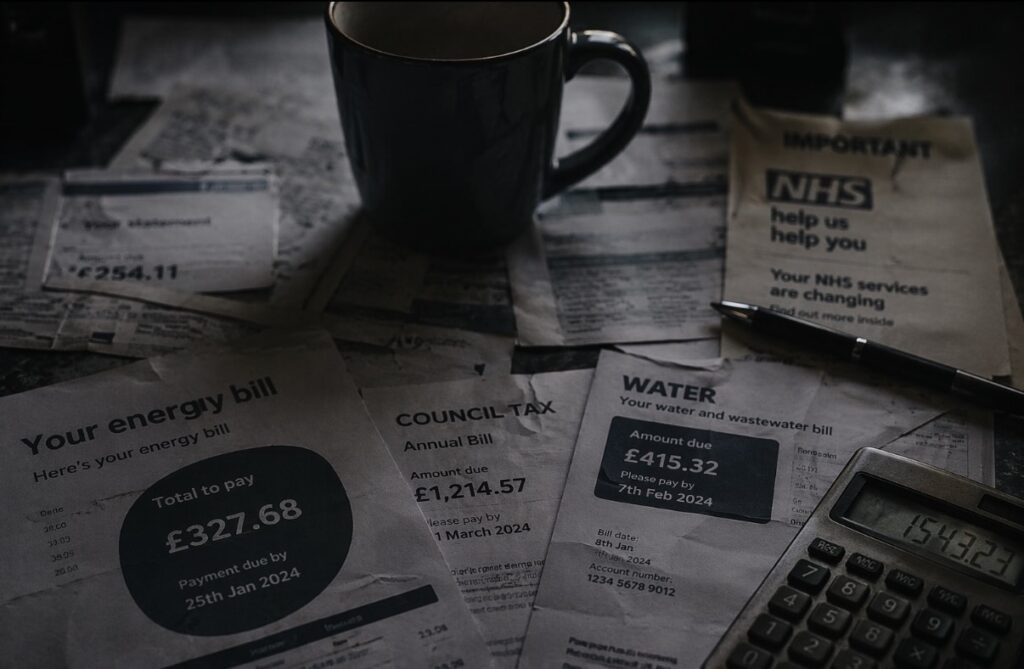
Your energy bill doubling 
Food creeping up every few months 
Services costing more but delivering less
Taxes tightening from every angle — landlords, small businesses, self-employed.
Because the government has to pull from somewhere.
And that’s the part people don’t always connect.
It’s not just one decision.
It’s the knock-on effect of everything that followed. And somewhere in all of this, there was the idea that we could deregulate our way out of it.
That we’d become leaner. Faster. More competitive.
“Singapore-on-Thames” and all that.
Less friction. Less oversight. More freedom.
But freedom for who?
Because when you actually look at how that plays out — in water, in infrastructure, in services — it doesn’t really look like efficiency.
It looks like extraction.
Costs go up.
Standards drift.
Accountability gets thinner.
And the benefits don’t spread evenly. They concentrate.
Deregulation sounds good in theory. In practice, it tends to favour the people who already have leverage.
The ones with capital.
The ones who can absorb risk.
The ones who can navigate a system with fewer guardrails.
For everyone else, it just feels like less protection.
Less stability.
More exposure.
And when you layer that on top of everything else — Brexit, COVID, energy shocks, war — it’s not surprising things feel stretched.
The system didn’t break overnight.
It just kept bending.
And now it feels like everything is slightly under pressure. All the time.
You notice it in the NHS 
You notice it in wages
You notice it in how far your money actually goes now
And it’s only when you step back and look at it all together that it hits you.
The scale of it.
Because this wasn’t a tweak.
It wasn’t a policy change.
It was a full structural shift — done without a clear plan for what came next.
And we’re still living inside that.
Still adjusting.
Still absorbing it.
Still being told it’s just “global pressures” 
But it’s more than that.
You can feel it.
Every month. Every bill. Every time something that used to be normal suddenly isn’t anymore 